
2000 BELLEVILLE SPORTS HALL OF FAME INDUCTEES
-
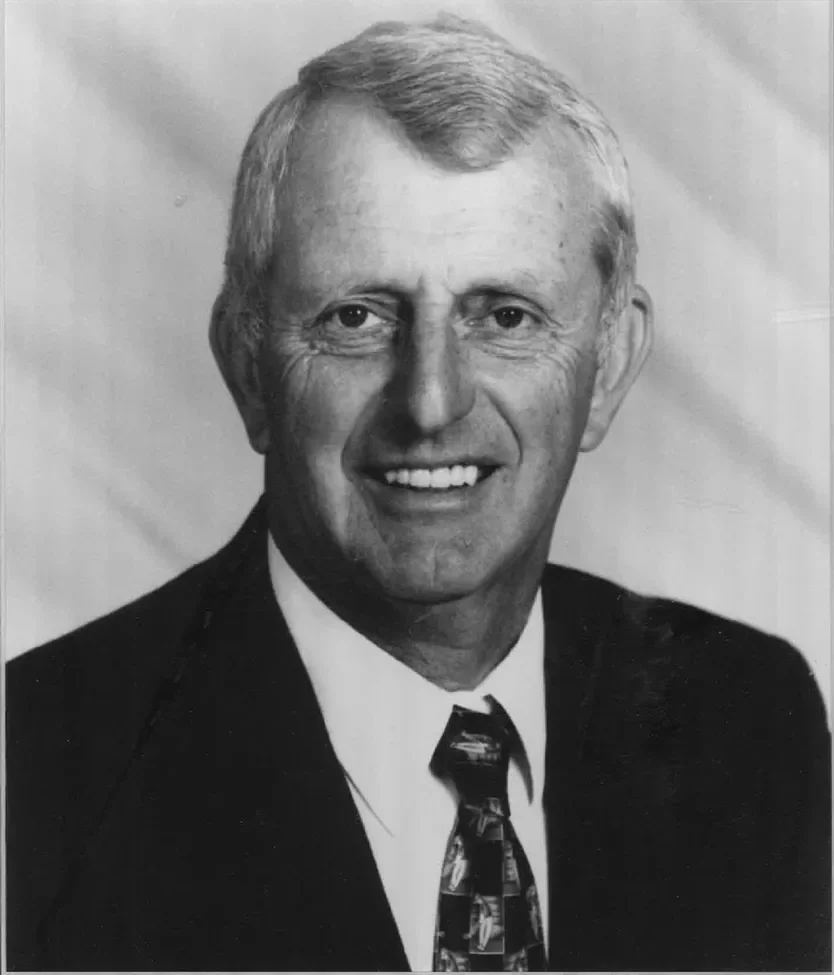
BRUCE FAULDS
BUILDER, MULTI-SPORT
-
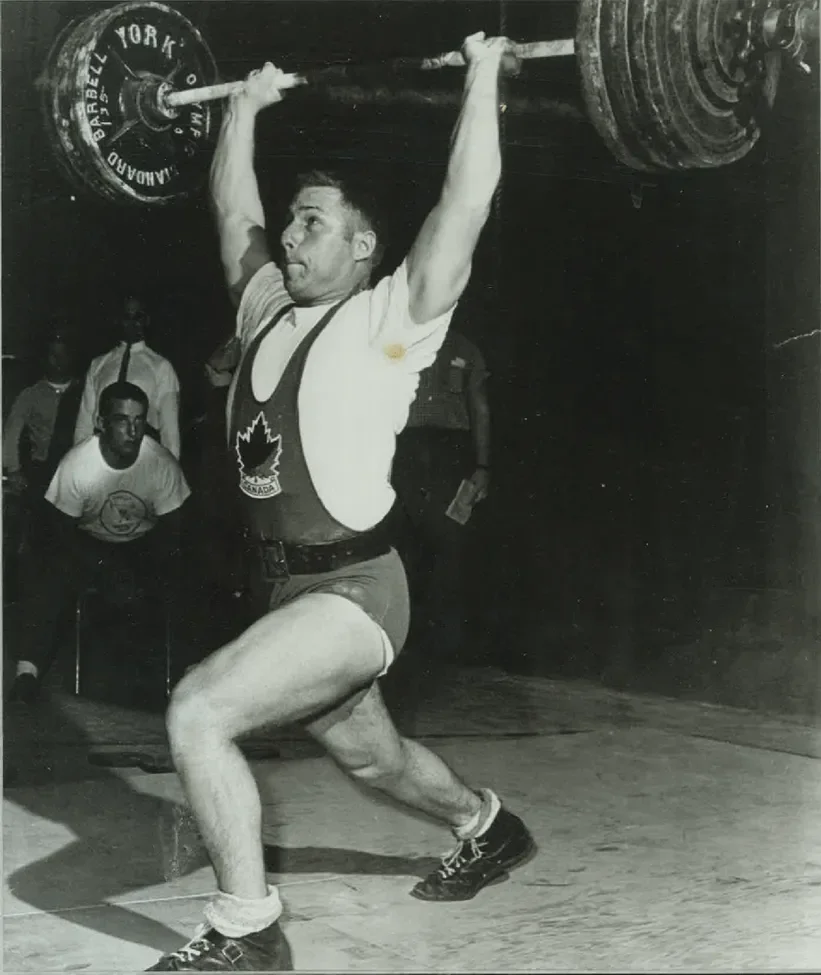
John Lewis
ATHLETE, WEIGHTLIFTING
-
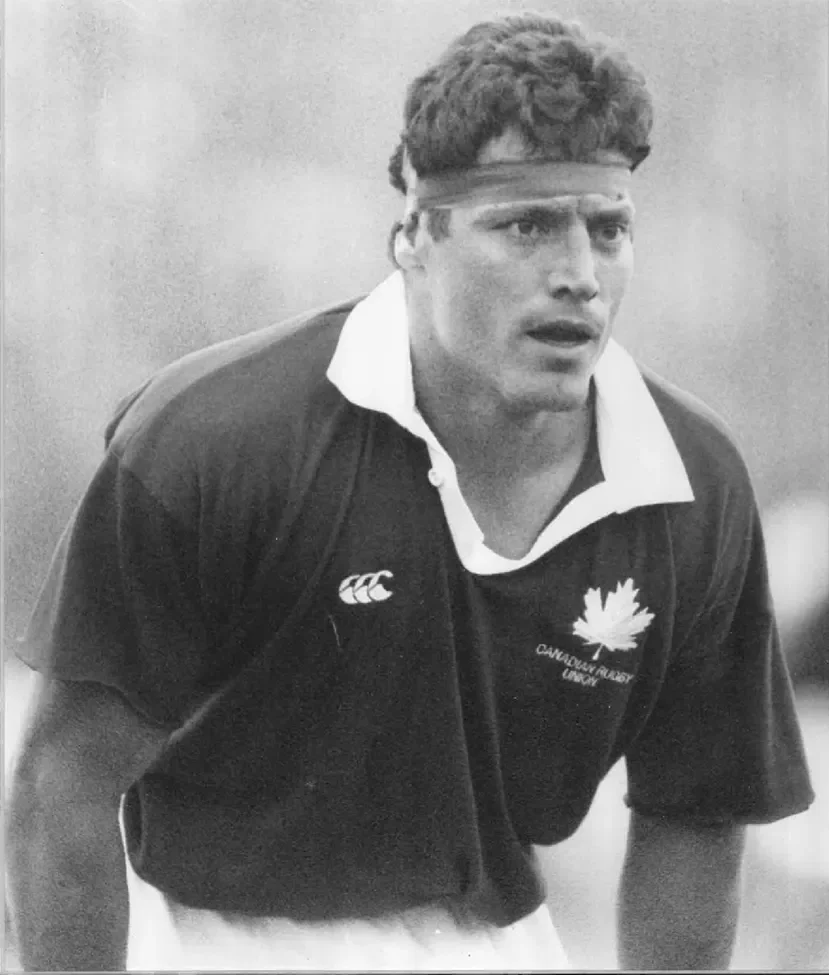
Karl Svoboda
ATHLETE, RUGBY
BRUCE FAULDS
BUILDER / MULTI-SPORT
Few men have given more to sports in Belleville, especially track and field, than Bruce Faulds. A gifted athlete himself, he went on to a superb career as a coach, fundraiser, convener and organizer. Faulds was born in Forest, Ontario on November 26, 1940. He is married to Diana and they have three children: Allan, Scott and Michael. A graduate of both McMaster University in Hamilton and Queen’s University in Kingston, he was a long-time educator in Belleville. As a youngster Faulds competed in soccer, cross country running, track and basketball in high school. He went to East Texas State University on a track scholarship in 1960 and ran for the McMaster University cross country and track teams in 1963, winning a bronze medal and lettering in track. He also played volleyball, basketball and badminton in Quinte for many years.
Faulds’ coaching career would be even more impressive. He coached high school soccer, volleyball, cross country, badminton, basketball and track and field while a teacher at Centennial Secondary School. He was noted for his coaching both cross country and track and field with the Quinte Legion Track Club. He was assistant Ontario coach at the National Legion championships in Newfoundland in 1997, Ontario’s head coach at the national track and field championships in 1999 as well, as East Regional coach at the Ontario Summer Games in Sudbury in 1984. Faulds also coached minor soccer in Quinte for several years. As an administrator he was president and head coach of the Quinte Knights Track Club for many years; president of the Bay of Quinte division of COSSA on several occasions as well as a convener. Faulds was one of the three founders of the Quinte Knights along with Ken How and John Chapman in 1982. He was co-founder of the Quinte Men’s Recreational Basketball League with Jim Murray and worked extensively to raise funds to build the track and field facility in Belleville now known as Mary-Anne Sills Park.
The list of athletes Faulds coached to Ontario and national medals is too long to mention in the area of cross country and track and includes sons Allan, Scott and Mike. Other notables he guided include Liam Revel, Michelle Foley, Tammy Staple, Ken Frennette and Anne Marie Farnell. He coached OFSAA, National Legion, National Juniors and Pan Am Games medalists. Nominator Vic Alyea attached a passage to Fauld’s nomination form that speaks volumes about the man: “The man who, without courting applause, is loved by all noble-minded men, respected by his superiors, and revered by his subordinates; the man who never proclaims what he has done, will do, can do, but where the need is, will lay hold with dispassionate courage, circumspect resolution, indefatigable exertion, and a rare power of mind, and who will not cease until he has accomplished his work, but who then, without pretension, will retire into the multitude, because he did the good act, not for himself, but for the cause of good.” Faulds now lives in Strathroy, Ontario.
JOHN LEWIS
ATHLETE / WEIGHTLIFTING
Few cities in Canada can match Belleville for its weightlifting legacy and John Lewis is a big part of that. Born here on January 19, 1943, he is one of the few city natives who can boast they competed in the Olympic Games. Lewis began his weightlifting career in 1957 at the age of 14 when he joined the legendary Apollo Barbell Club. There, under the watchful eye of fellow Hall of Fame inductee Ken Carr-Braint he quickly moved up the sport’s ladder with the highlight coming in 1964 when he was named to Canada’s Olympic team. Highlights in his career include being a Canadian junior, intermediate and senior champion. He held Canadian records in the senior and junior divisions and in junior competition at the British Commonwealth level. At the Canadian Weightlifting Championships in 1964 he was named “best lifter.” A member of the Canadian team at the 1963 Pan American Games in Sao Paulo, Brazil, Lewis won a bronze medal in the middle heavyweight class and set new Canadian records in the snatch (280 lbs) and total lift (924 lbs). At the ’64 Olympics in Tokyo, Japan he also set new Canadian records in the snatch (303 lbs), clean and jerk (369 lbs) and total lift (969 lbs) while placing fourth in the snatch and ninth overall in the middle heavyweight division.
Lewis was an International Weightlifting Federation Elite Medal recipient (the first Canadian) and the Tom Longboat Award winner for outstanding Native Canadian athlete in 1964. The elite medal is awarded only after international competition where a stringent standard is met. Lewis received it for his 969 pounds total lift in Tokyo. He was Belleville’s first Olympic competitor when he travelled to Japan in 1964.
Lewis now lives in Webster, N.Y. He’s married to Sylvia and has three children (John, Wayne and Melinda). When Lewis returned from the Olympic Games he was greeted at the Belleville railway station by a large crowd that included the city’s most prominent dignitaries. While a band played “When Johnny Comes Marching Home” the lifter was paraded through the city. A grateful city has made several presentations to Lewis for his weightlifting prowess, culminating with his induction to the Belleville Sports Hall of Fame. Lewis joins fellow Apollo Club members Carr-Braint, Art Walt, Price Morris and Gary Walt.
KARL SVOBODA
ATHLETE, RUGBY
Karl Svoboda “caps” an unparalleled career in Canadian rugby with his induction into the Belleville Sports Hall of Fame. When Svoboda retired from active play he was the most capped hooker in the history of the Canadian National Rugby Team, with 24. (A “cap” is symbolically awarded to a rugby player who represents his country in international play). Born in Belleville March 23, 1962, he began his rugby career in 1978 with the Belleville Bulldogs RFC and at Centennial Secondary School. As a 17-year-old he was named to Mid-Ontario senior and junior representative sides and in 1980 he was a member of the Ontario Junior Squad that was the first Canadian team to win the prestigious Preston Grasshoppers Tournament in England. Svoboda was a member of the Ontario Senior Rugby Team between 1983 and 1995, several times captaining the team. He captained the University of Toronto Varsity Blues (1981-82) and was a member of the Canadian National Team (1984-1995). He earned the right to play in the first three World Cup of Rugby global championships in Australia and New Zealand (1987), France and Britain (1991) and South Africa (1995). Svoboda captained Canada to its first, and to date only, win over England in 1993. A rarity for a Canadian, he was offered professional playing contracts by English Rugby Union teams in Bedford and Northampton following the 1991 World Cup. In 1995 Svoboda accepted an international rugby scholarship to historic Oxford University. While on tour of Eastern Europe with an international touring side called the Penguins, Svoboda was inducted into the Czechoslovakian Rugby Union Hall of Fame in Prague. (His father, John, was born and raised in the Czech Republic before coming to Canada). In 1995 Svoboda retired from both the Canadian and Ontario sides but remains active in the sport as a coach. Now living in Whitby, he’s married to Kendra. A teacher, he earned a Master’s degree in business from Oxford. Perhaps Svoboda’s career was best encapsulated in a Globe and Mail article published in December, 1994 following a game with France. “Quite simply, Canada put in one of the greatest displays of defence in its 60-year international history. Canada’s steely determination was personified by 32-year-old Ontario hooker Karl Svoboda. With four minutes remaining, Svoboda, groggy from savage treatment handed out by an uncompromising French front row, had to be dragged off the field by his captain and medical team, so reluctant was he to leave the pitched battle.